
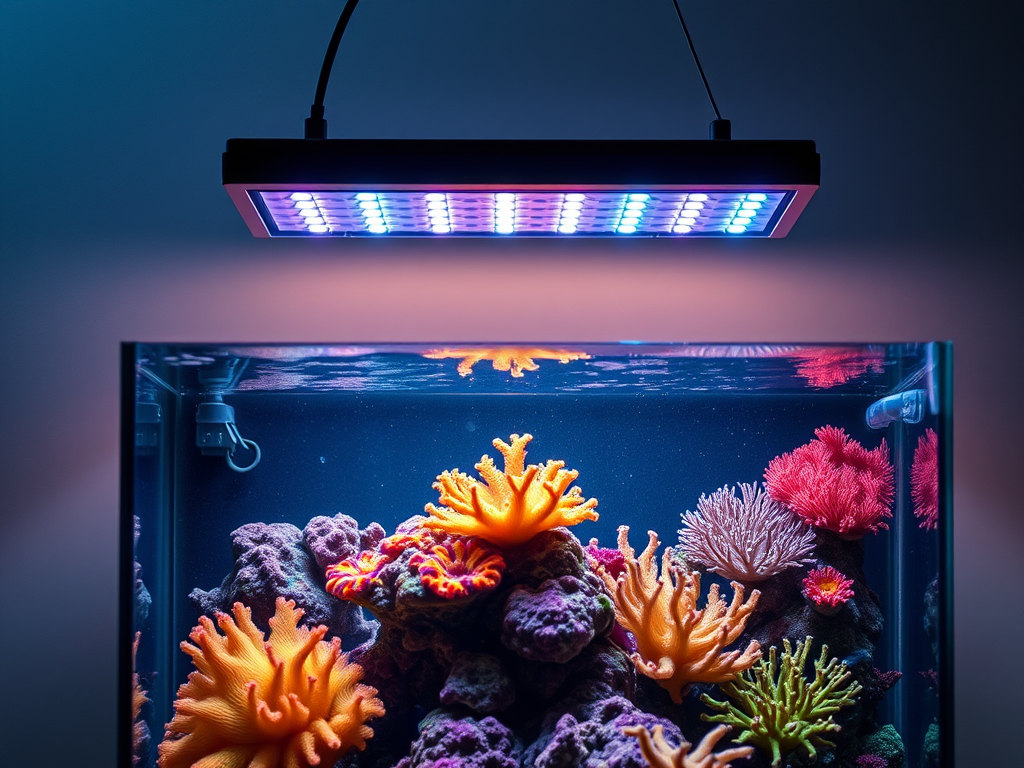
Small reef tanks (up to 20 gallons) require precise care when it comes to lighting. In these compact setups, traditional lighting options like T5s or metal halides often produce too much heat and can be inefficient. That’s why LED lighting is rapidly becoming the choice for reef hobbyists. In this guide, we’ll explore why LED lighting is ideal for small reef tanks, spotlight the Noopsyche K7 Mini, compare it to other options, and share practical tips for installation and optimization.
Disclaimer:
The Noopsyche K7 Mini is featured in this article purely as my personal favorite option for LED reef tank lighting. I am not an affiliate for Noopsyche, and this product is not available on Amazon. However, several other brands mentioned—such as Viparspectra and Fluval—are linked through Amazon affiliate links. If you purchase those products through these links, I may earn a commission at no additional cost to you. Your support helps keep this blog running. Thank you!
Why LED Lighting is Ideal for Small Reef Tanks
Energy Efficiency & Low Heat
LEDs consume less power and generate significantly less heat than traditional lights. This is crucial for small tanks, where even a small increase in temperature can upset delicate water chemistry.
Customizable Spectrum
LED systems offer the ability to fine-tune the light spectrum. You can adjust the color output to optimize coral growth and enhance vibrant colors – essential for both SPS and soft corals thriving in a nano reef.
Smart Control Features
Modern LED fixtures often come with app-based control, allowing you to simulate natural sunrise and sunset cycles, adjust intensity throughout the day, and even schedule automated routines. This means less manual work and more consistent results for your reef.
Choosing the Right Light for Your Livestock
When it comes to selecting a reef tank light, one size does not fit all. The optimal lighting setup for your tank will depend on the specific species you plan to keep. For example, if you’re setting up a FOWLR (Fish Only With Live Rock) tank, you won’t need a high PAR (Photosynthetically Active Radiation) light since fish and live rock are less demanding when it comes to light intensity.
For tanks that include corals, lighting needs can vary significantly:
- Soft Corals: Soft corals generally require lower PAR levels compared to their stony counterparts. If your primary interest is in soft corals, you can keep your costs down by choosing a less powerful light. This option will still provide sufficient light to maintain their health and coloration without the added expense of high-output fixtures.
- LPS & SPS Corals: LPS (Large Polyp Stony) and SPS (Small Polyp Stony) corals have higher lighting requirements. SPS corals, in particular, need a robust PAR output to thrive, so a light that can deliver deep, concentrated photons is essential.
Futureproofing Your Tank:
Even if you’re starting small or with a specific livestock mix, consider your long-term goals. As your experience grows, you might want to expand your collection to include a wider variety of corals. In this case, investing in a light that’s powerful enough to support almost any coral is a wise choice. That’s where the Noopsyche K7 Mini shines. It’s designed to be flexible—its advanced spectrum control and strong output mean it can cater to soft corals today while also accommodating the higher demands of SPS corals if you decide to upgrade your tank in the future.
Affordable Versatility:
The K7 Mini strikes the perfect balance between affordability and performance. It gives you the peace of mind that your tank can “grow” with you. Whether you’re running a FOWLR, a soft coral setup, or planning to expand into a mixed coral collection later on, the K7 Mini offers the power and flexibility to support your evolving reef hobby without breaking the bank.
By choosing a light that aligns with both your current needs and future ambitions, you’re ensuring that your reef tank remains adaptable and thriving as your collection expands.
Ready to futureproof your tank? Check out the Noopsyche K7 Mini and explore how it can support your reef tank journey, no matter what livestock you decide to keep.
Spotlight on the Noopsyche K7 Mini
For reef tanks up to 20 gallons, the Noopsyche K7 Mini is a standout choice. Here’s why:
Key Features
- 60W Output with Concentrated Irradiation: Designed specifically for nano tanks, its concentrated light output ensures deeper penetration without spillage.
- APP-Controlled WiFi Functionality: With a smart app, you can easily adjust settings such as light ramping, spectrum, and intensity, mimicking natural sunlight cycles.
- Optimized Mounting Recommendations: The K7 Mini is best mounted 6″–12″ from the water’s surface, ensuring even light distribution over your tank.
- Advanced Color Control & Light Shaping: The device uses a borosilicate glass lens to produce a brilliant, mixed light that enhances coral growth and coloration.
Check out the Noopsyche K7 Mini here to learn more or purchase!
Why It’s Perfect for Nano Tanks
The K7 Mini’s design minimizes heat output while providing robust PAR (Photosynthetically Active Radiation) – ideal for supporting nano SPS-dominated systems. Its app control and customization options allow you to fine-tune your lighting to exactly match your reef’s needs.
Competitor Analysis: Other LED Options for Small Tanks
While the Noopsyche K7 Mini stands out, it’s important to know your alternatives:
Other LED Fixtures
- Viparspectra LED Lights: Known for energy efficiency and a good spectrum, these lights are popular among hobbyists. However, some users report less precise control compared to the K7 Mini.
Buy Viparspectra LED lights on Amazon - Fluval LED Systems: Fluval offers quality LED solutions with user-friendly features, but they sometimes generate more heat than ideal for smaller volumes.
Check out Fluval LED options on Amazon - The NICREW HyperReef Gen 2 is another commendable option for reef tank enthusiasts. It offers a customizable spectrum and intensity, catering to various coral needs. The fixture includes a wide-angle optical system with a 120-degree beam angle, ensuring comprehensive tank coverage. Additionally, its efficient heat management system prolongs LED lifespan. For more details, you can find the NICREW HyperReef Gen 2 on Amazon.
Pros and Cons
- Noopsyche K7 Mini:
Pros: Excellent spectrum control, low heat output, and deep light penetration.
Cons: The app interface may require a short learning curve. - Competitors:
Pros: Often available at competitive prices and with established brand support.
Cons: May not offer the same level of customization or may generate excess heat in nano setups.
Installation & Setup Tips for LED Lighting in Small Reef Tanks
Mounting Your LED
- Ideal Height: Position your LED fixture between 6″ and 12″ above the water surface for optimum coverage without spillage.
- Tank Layout Considerations: Adjust your tank decoration to ensure that light reaches all areas. Avoid overcrowding rockwork that might cast unwanted shadows.
Initial Setup Steps
- Unbox and Assemble: Follow the manufacturer’s instructions carefully for mounting and assembly.
- Connect to the App: Download the Noopsyche app (available on iOS and Android) and connect your light fixture.
- Test Light Output: Run a test cycle to ensure even light distribution over your tank.
Pro Tip
If you’re using any additional fixtures (such as supplemental LEDs for specific zones), use your Amazon affiliate links to guide readers to high-quality mounting brackets or diffusers: Buy LED mounting brackets on Amazon
Optimizing Your LED Lighting Performance
Establishing a Photoperiod
- Simulate Natural Sunlight: Program your LED to slowly ramp up in the morning and dim in the evening. This not only creates a more natural environment but also reduces coral stress.
- Custom Schedules: For nano tanks, aim for a photoperiod of 8–10 hours. Use the app to set these schedules.
Spectrum Tuning for Coral Health
- Adjustable Spectrum Settings: Use the app to modify the spectrum. Different coral types have unique light needs—SPS corals often benefit from higher blue light, while soft corals may require more red.
- Monitor and Tweak: After initial setup, observe your corals and adjust settings as necessary. Consistent testing (using a PAR meter if available) can help fine-tune the light output.
Routine Maintenance
- Clean the Fixture: Regularly wipe down the lens to remove dust and salt residue.
- Firmware Updates: Check for app updates or firmware improvements to ensure optimal performance.
Conclusion
LED lighting is the smart choice for small reef tanks, offering energy efficiency, low heat output, and precise control over the light spectrum. The Noopsyche K7 Mini stands out as an excellent option for tanks up to 20 gallons, delivering deep light penetration and advanced app control to optimize coral health and growth.
By choosing the right lighting solution and following our installation and optimization tips, you can create a thriving nano reef that enhances both the beauty and performance of your aquatic ecosystem.
Ready to upgrade your reef tank lighting? Check out the Noopsyche K7 Mini or explore our other recommended LED fixtures to find the perfect fit for your setup. And don’t forget to check our affiliate links for additional accessories that can help you get the most out of your LED lighting!


 My AIO Reef
Leave a reply to Basic Accessories for your AIO Reef – My AIO Reef Cancel reply