
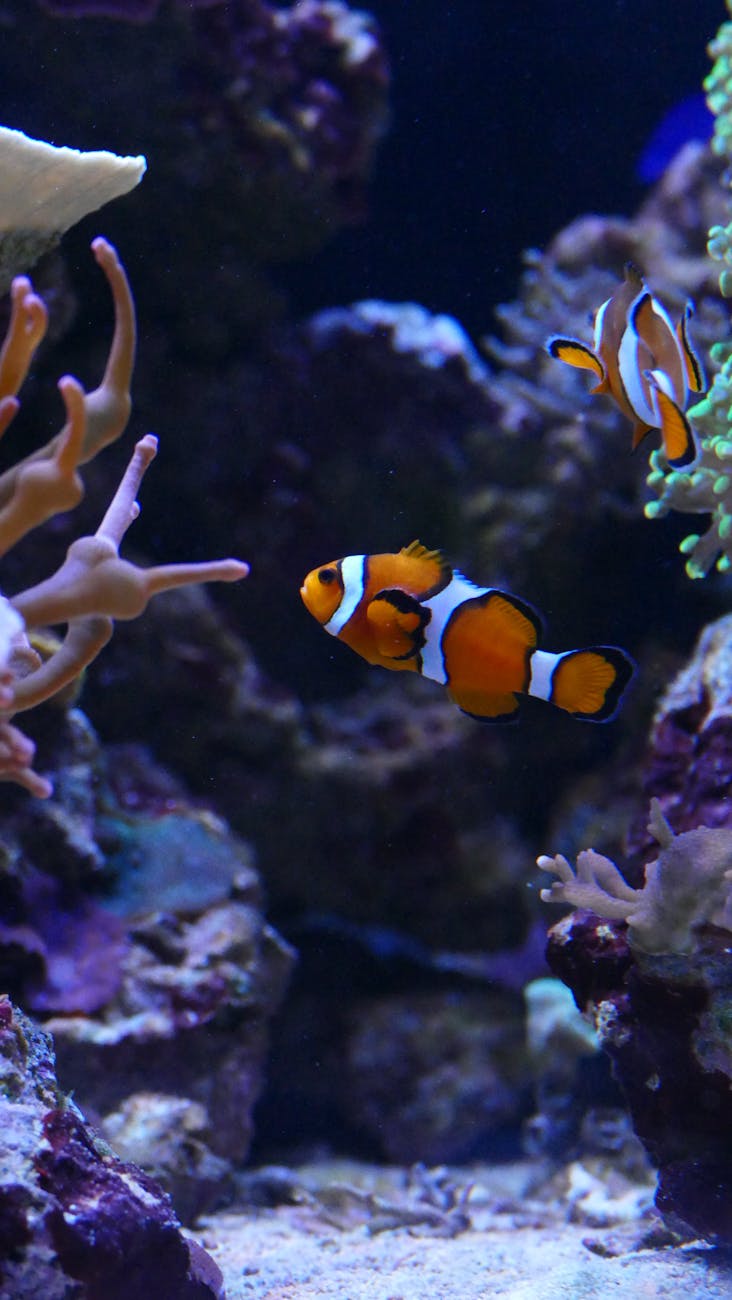
No fish is more iconic in the world of reef tanks than the beloved clownfish. Known for their vibrant colors, endearing personalities, and symbiotic relationship with anemones, clownfish are a favorite among aquarists. In this article, we’ll explore the fascinating world of clownfish, from their care requirements to breeding tips, making them a star addition to your aquarium.
Meet the Clownfish
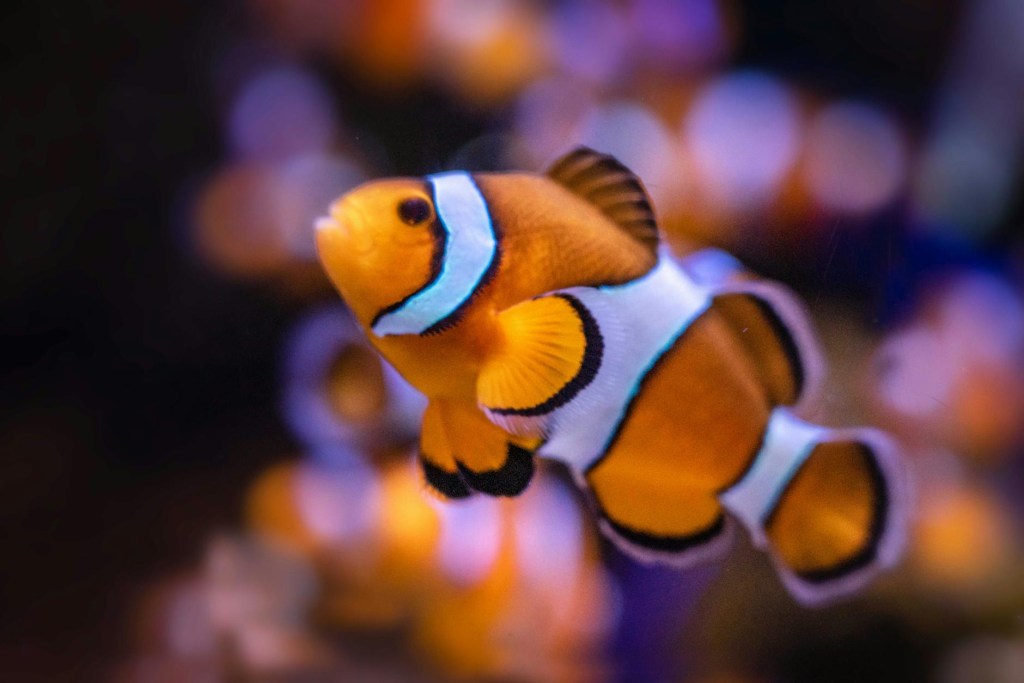
Clownfish, belonging to the family Pomacentridae, are native to the warm waters of the Indo-Pacific region. There are over 30 different species, with the most popular being the Orange Clownfish (Amphiprion percula) and the False Percula Clownfish (Amphiprion ocellaris). These fish are renowned for their bright orange bodies with distinctive white bands outlined in black.
Key Characteristics:
- Coloration: Bright orange with white bands, though some species have variations in color and pattern.
- Size: Generally grow up to 4 inches in length.
- Behavior: Peaceful, social, and often seen swimming close to anemones.
Ideal Tank Conditions
Clownfish are relatively hardy and adaptable, making them a great choice for both beginner and experienced aquarists. Here are the ideal tank conditions to keep them happy and healthy:
Tank Size:
- A minimum of 20 gallons for a pair, with larger tanks recommended for community setups.
Water Parameters:
- Temperature: 75-82°F
- pH: 8.1-8.4
- Specific Gravity: 1.021-1.026
- Ammonia/Nitrite: 0 ppm
- Nitrate: <20 ppm
Tank Setup:
- Live Rock: Provides hiding spots and contributes to biological filtration.
- Anemones: Though not required, hosting anemones like the Bubble Tip Anemone (Entacmaea quadricolor) can enhance their natural behavior.
- Filtration: A high-quality filtration system to maintain pristine water conditions.
Feeding Your Clownfish
Clownfish are omnivorous and have a diverse diet. Providing a balanced diet will ensure they receive all the necessary nutrients for vibrant coloration and good health:
- Pellets/Flakes: High-quality marine fish foods formulated for omnivores.
- Frozen Foods: Brine shrimp, mysis shrimp, and marine mix.
- Live Foods: Occasionally offer live brine shrimp or copepods as a treat.
Feed small amounts 2-3 times daily, ensuring all food is consumed within a few minutes to avoid water quality issues.
Breeding Clownfish
Clownfish are known for their interesting breeding behavior and are one of the few marine fish that can be bred successfully in captivity. Here are some tips for breeding clownfish:
Pairing:
- Start with a group of juveniles and allow them to form pairs naturally. The dominant fish will become female, and the smaller, subordinate fish will become male.
Breeding Setup:
- Use a separate breeding tank with stable water conditions.
- Provide a flat surface like a tile or a piece of live rock for the female to lay eggs.
Spawning:
- Clownfish pairs will clean the chosen surface and lay eggs, which the male will fertilize.
- The male guards and aerates the eggs until they hatch in about 6-10 days.
Raising Fry:
- Remove the fry to a rearing tank to avoid predation.
- Feed the fry rotifers and newly hatched brine shrimp.
Common Health Concerns
Clownfish are robust but can be susceptible to common marine diseases if tank conditions are not optimal:
- Ich: Look for small white spots on the body and fins.
- Brooklynella (Clownfish Disease): Characterized by excess mucus and difficulty breathing.
- Bacterial Infections: Can appear as sores, ulcers, or fin rot.
Maintaining high water quality, providing a balanced diet, and quarantining new arrivals can help prevent these issues.
Conclusion
Clownfish are a delightful addition to any reef tank, offering both beauty and engaging behavior. Their vibrant colors and unique relationship with anemones make them a captivating centerpiece in any marine aquarium. With proper care and attention, you can enjoy the charming presence of clownfish in your underwater paradise for years to come.
Love clownfish as much as we do? Share your experiences and tips in the comments below, and join our community at aioreef.com for more reef tank inspiration and advice!

 My AIO Reef
Leave a comment