
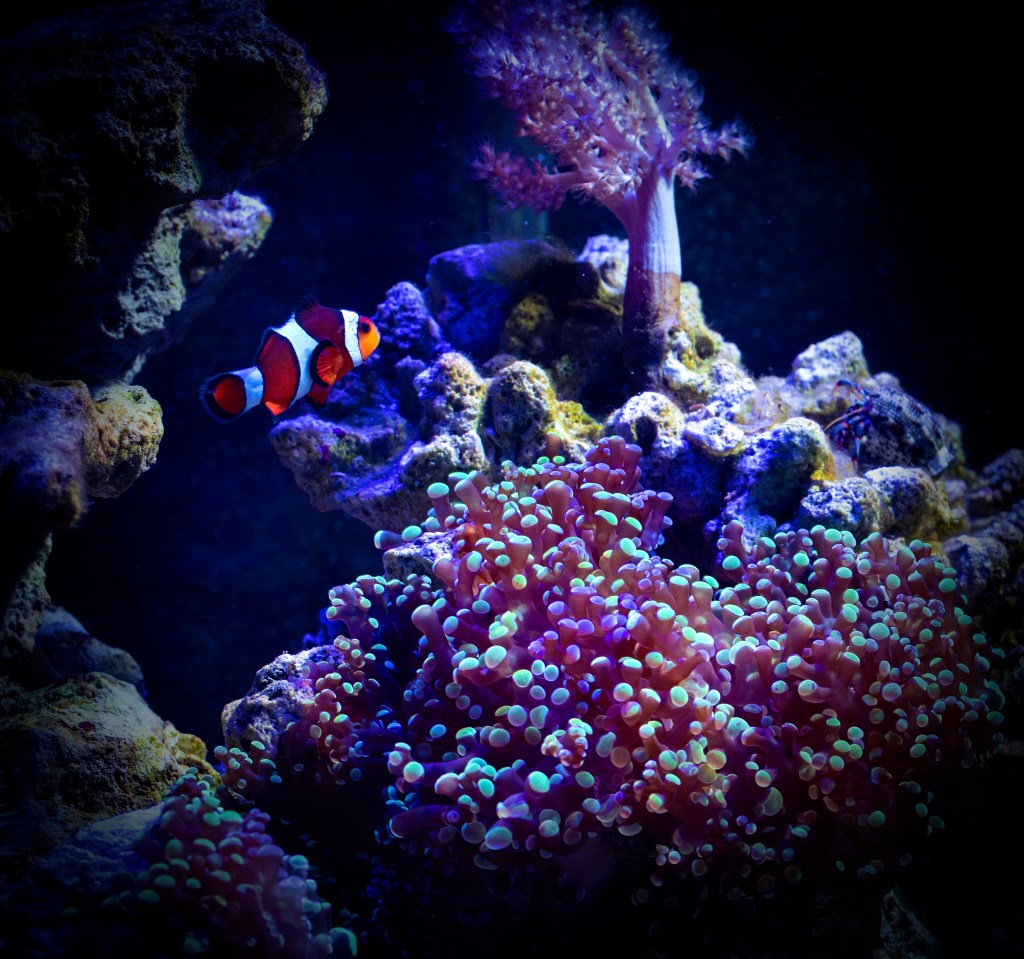
Frogspawn coral (Euphyllia divisa) is a stunning addition to any reef tank, prized for its vibrant colors and unique appearance. Known for its long, tentacle-like polyps resembling frogspawn, this LPS (Large Polyp Stony) coral is popular among both beginner and experienced reef enthusiasts. Here’s everything you need to know about caring for and appreciating frogspawn coral in your own aquarium.
Appearance and Behavior:
Frogspawn coral features fleshy polyps that extend during the day and retract at night, resembling a cluster of elongated tentacles. These tentacles come in a variety of colors including green, brown, pink, and fluorescent shades under actinic lighting. The coral’s skeleton often has a branching or encrusting structure, adding a dynamic element to your reefscape.
Tank Requirements:
Maintaining optimal conditions is crucial for the health of frogspawn coral. Place it in a low to moderate flow area to prevent tissue damage from strong currents. Moderate lighting is ideal; acclimate slowly to higher light if needed to avoid stress. Stable water parameters are essential, with calcium levels around 400-450 ppm, alkalinity between 8-12 dKH, and consistent temperature and salinity.
Feeding and Care:
Frogspawn coral obtains much of its nutrition through photosynthesis but benefits from supplemental feeding. Offer small pieces of meaty foods like brine shrimp, mysis shrimp, or plankton once or twice a week. Ensure water quality remains high to prevent issues like tissue recession or infections.
Propagation and Growth:
Propagation of frogspawn coral can be achieved through carefully cutting and fragging the coral. Use proper tools to avoid damaging the coral’s tissue, and provide ample space between fragments to prevent them from stinging each other. Fragments can be glued or attached to live rock, where they will slowly grow into new colonies over time. They can send out stinging sweeper tentacles so give them adequate space around other coral.
Compatibility:
When placing frogspawn coral in your tank, consider its surroundings carefully. Give it ample space to expand its tentacles without touching neighboring corals, as its sweeper tentacles can sting nearby species. Maintain good water flow to avoid detritus buildup and ensure stable water conditions to prevent stress.
Conclusion:
Frogspawn coral is a captivating addition to any reef tank, offering both beauty and ease of care when provided with suitable conditions. By understanding its needs for light, flow, and nutrition, you can enjoy watching this coral thrive and add a vibrant touch to your underwater world. Whether you’re a beginner or seasoned hobbyist, frogspawn coral is sure to become a favorite in your reef-keeping journey.
Dive into the beauty of frogspawn coral and create a thriving aquatic ecosystem that showcases the wonders of nature’s underwater gardens.


 My AIO Reef
Leave a comment